Introduction
When it comes to professional carpet cleaning, not all methods are created equal. Different techniques offer varying levels of cleaning depth, drying times, and suitability for different carpet types and situations. Understanding these methods helps you make informed decisions about your carpet care and communicate effectively with cleaning professionals.
This guide explains the most common carpet cleaning methods, their advantages and limitations, and when each is most appropriate.
Hot Water Extraction (Steam Cleaning)
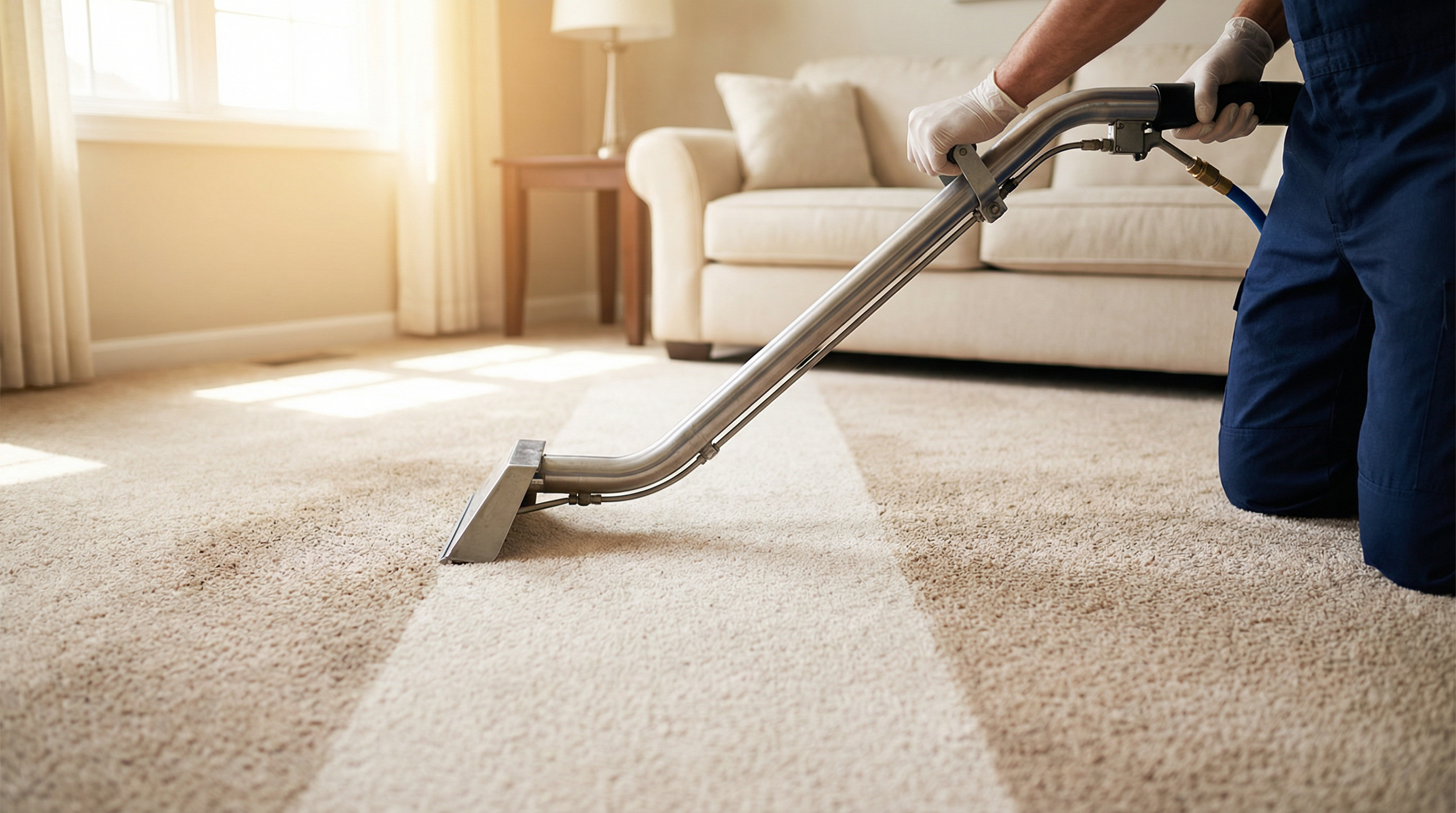
Despite its common name, steam cleaning doesn't actually use steam. Hot water extraction—the industry's preferred term—uses hot water under high pressure to agitate carpet fibers and dissolve dirt, which is then extracted by powerful vacuum suction.
How It Works
The process begins with pre-treatment of stains and high-traffic areas with specialized cleaning solutions. Then, hot water (typically 150-200°F for professional equipment) mixed with cleaning agents is injected deep into the carpet under pressure. Immediately after, powerful vacuum extraction removes the water along with dissolved dirt, allergens, and cleaning solution.
Advantages
Hot water extraction provides the deepest clean of any carpet cleaning method. It effectively removes embedded dirt, allergens, bacteria, and residue from previous cleanings. Most carpet manufacturers recommend this method, and it's often required to maintain warranty coverage.
The high water temperature kills dust mites and bacteria, making it particularly beneficial for allergy sufferers. When performed by professionals with truck-mounted equipment, extraction is thorough enough that carpets dry within 6-12 hours.
Limitations
Drying time is the primary limitation. While professional equipment minimizes moisture, carpets still need several hours to dry completely. Over-wetting—a risk with rental equipment or inexperienced operators—can extend drying to 24 hours or more and potentially cause mold growth.
Hot water extraction isn't suitable for all carpet types. Natural fiber carpets like wool or sisal may shrink or become damaged. Always verify that your carpet can tolerate this method.
Best For
Hot water extraction is ideal for annual deep cleaning, heavily soiled carpets, homes with allergy sufferers, and situations where the deepest possible clean is desired.
Dry Carpet Cleaning
Dry cleaning methods use little to no water, relying instead on chemical compounds or specialized machines to clean carpet fibers. Several variations exist under the dry cleaning umbrella.
Dry Compound Cleaning
This method involves spreading an absorbent compound—often containing cleaning agents and solvents—across the carpet. The compound is worked into the fibers using a machine with counter-rotating brushes. As the compound absorbs soil, it's vacuumed away along with the dirt it has captured.
Dry Foam Cleaning
A foam cleaning agent is applied to the carpet and worked into the fibers with a rotating brush machine. The foam encapsulates dirt as it dries, then is vacuumed away.
Advantages
The primary advantage of dry cleaning is minimal drying time—often just one to two hours. This makes it ideal for commercial settings where extended downtime isn't practical. There's also no risk of over-wetting or the mold growth that can result from excessive moisture.
Limitations
Dry cleaning methods don't clean as deeply as hot water extraction. They're effective for surface soil and maintenance cleaning but may not adequately address embedded dirt, allergens, or stubborn stains. Some dry cleaning compounds can leave residue if not thoroughly vacuumed.
Best For
Dry cleaning is appropriate for commercial spaces requiring quick turnaround, maintenance cleaning between deep cleanings, carpets that cannot tolerate moisture, and situations where immediate use of the space is necessary.
Encapsulation Cleaning
Encapsulation is a relatively newer method that has gained popularity, particularly in commercial settings.
How It Works
A specialized polymer cleaning solution is applied to the carpet and agitated with a rotary or cylindrical brush machine. As the solution dries, it crystallizes around dirt particles, encapsulating them. The crystallized residue is then removed through regular vacuuming over the following days.
Advantages
Encapsulation offers several benefits: low moisture means fast drying (typically one to two hours), the crystallized residue continues to release during subsequent vacuuming, and there's no sticky residue left behind to attract new soil. It's also more environmentally friendly than some other methods, using less water and fewer chemicals.
Limitations
Like other dry methods, encapsulation doesn't provide the deep cleaning of hot water extraction. It's a maintenance method rather than a restorative one. Heavy soiling may require multiple treatments or a different method entirely.
Best For
Encapsulation works well for routine maintenance in commercial settings, interim cleaning between deep cleanings, and low-moisture requirements.
Bonnet Cleaning
Bonnet cleaning is a surface cleaning method commonly used in commercial settings for quick maintenance.
How It Works
A rotary floor machine fitted with an absorbent pad (the bonnet) spins across the carpet surface. The pad is soaked in cleaning solution and absorbs soil from the carpet's surface as it rotates. Pads are changed frequently as they become soiled.
Advantages
Bonnet cleaning is fast and inexpensive, making it popular for commercial maintenance. It provides a quick refresh of carpet appearance with minimal drying time.
Limitations
This method cleans only the carpet surface. It doesn't address embedded soil and may actually push some dirt deeper into the carpet. The spinning action can also cause fiber distortion in some carpet types. Bonnet cleaning should never be considered a substitute for deep cleaning.
Best For
Bonnet cleaning is appropriate only for quick surface maintenance in commercial settings, pre-event touch-ups, and interim cleaning between proper deep cleanings.
Shampooing
Once the dominant carpet cleaning method, shampooing has largely fallen out of favor but is still occasionally used.
How It Works
A foamy shampoo solution is applied to the carpet and agitated with a rotary brush machine. The foam suspends dirt as it dries, and the residue is vacuumed away.
Advantages
Shampooing can be effective for heavily soiled carpets and produces visible foam that some customers find reassuring.
Limitations
The significant disadvantage of shampooing is residue. Shampoo solutions often leave sticky residue in carpet fibers that attracts new soil, causing carpets to re-soil quickly. This "resoiling" problem has led most professionals to abandon shampooing in favor of other methods.
Best For
Shampooing is rarely recommended today. If used at all, it should be followed by thorough hot water extraction to remove residue.
Choosing the Right Method
Consider Your Carpet Type
Natural fiber carpets (wool, sisal, cotton) often require low-moisture methods. Synthetic carpets (nylon, polyester, olefin) typically tolerate hot water extraction well. Always verify manufacturer recommendations.
Consider Your Situation
For annual deep cleaning, hot water extraction is usually the best choice. For maintenance between deep cleanings, encapsulation or dry methods may be appropriate. For commercial spaces with limited downtime, low-moisture methods offer practical advantages.
Consider Your Goals
If your priority is the deepest possible clean, hot water extraction is the answer. If quick drying and immediate use are priorities, dry methods are more appropriate. For routine maintenance, encapsulation offers a good balance of cleaning effectiveness and convenience.
Questions to Ask Your Cleaning Professional
When hiring a carpet cleaner, ask about the method they use and why they recommend it for your situation. Inquire about expected drying time, whether pre-treatment is included, and what type of equipment they use (truck-mounted vs. portable). A reputable professional will explain their approach and tailor their method to your specific needs.
Conclusion
Understanding carpet cleaning methods empowers you to make informed decisions about your floor care. While hot water extraction remains the gold standard for deep cleaning, other methods have their place in a comprehensive maintenance strategy.
The best approach often combines methods: regular vacuuming and spot cleaning at home, periodic maintenance cleaning with low-moisture methods, and annual deep cleaning with hot water extraction. This multi-layered strategy keeps your carpets looking their best while maximizing their lifespan.
Have questions about which cleaning method is right for your carpets? Haugland Brothers has been providing expert carpet care in Chicago's Western Suburbs since 1968. Contact us for a free consultation and estimate.